Beyond logo

Winning in a Rate-Led Market

Beyond logo with a vacation rental image
The overall US short-term rental market shows a clear shift toward rate-led revenue growth, based on the trends witnessed in 2025. While overall occupancy remains stable year over year, revenue performance improved significantly, driven by strong Average-Daily-Rate (ADR) increases, particularly during peak travel periods. This indicates that demand is resilient, guests are willing to pay more for the right dates and properties, and a flexible, dynamic pricing strategy is the key lever separating average from top-performing listings.

Key Annual Metrics (Market Averages)

Year
Occupancy %
ADR $
RevPAN $
2024
49%
$300
$147
2025
49%
$387
$189
Change
0 p.p. (flat)
+$87 (+29%)
+42.2 (+29%)

Pricing Strategy Will Drive Revenue in 2026

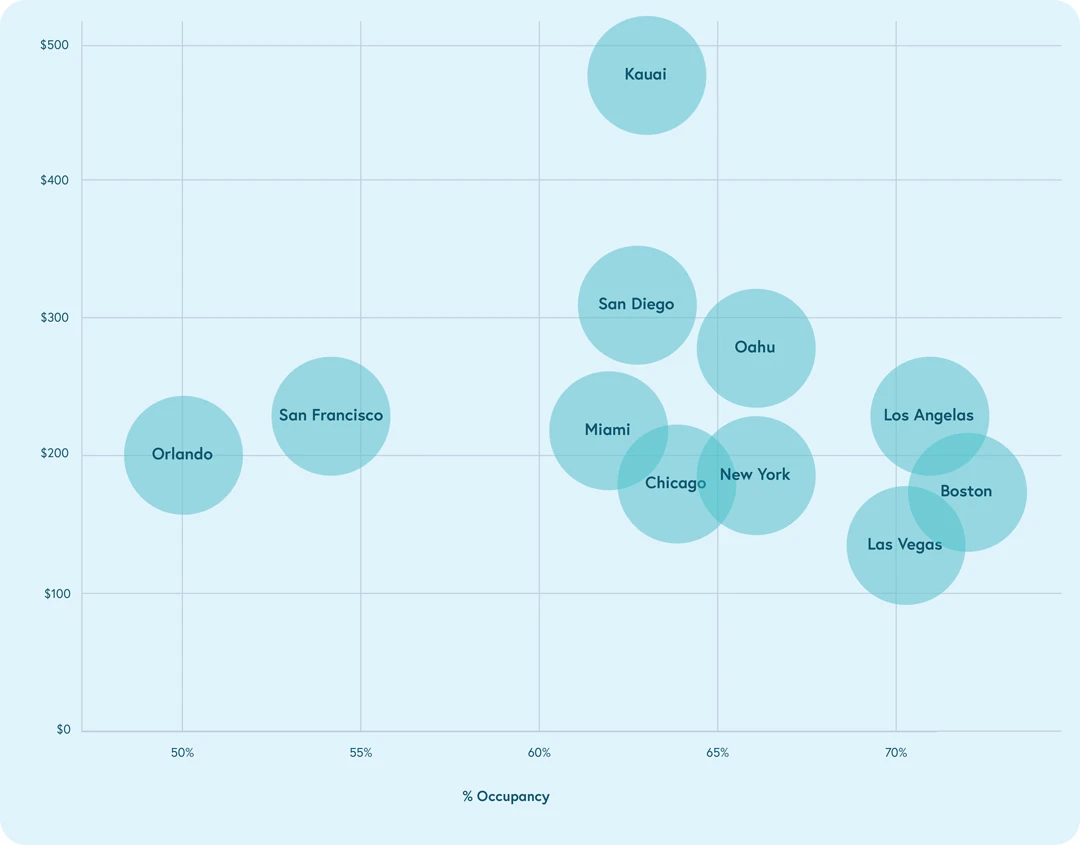
Hot Markets in 2025

While there were a number of hot markets across the entire US, as evidenced by the chart above, Beyond chose to dive deep into three markets that have the potential for particularly interesting growth. To learn more about what Beyond’s data is showing for your specific market, contact us here.
Carolina Mountains

Carolina Mountains

The seasonal Carolina Mountains market is shaping up in 2026 as a rate-led market, where ADR growth is outpacing occupancy gains. Early bookings indicate a healthy willingness by guests to pay for the right stay in the right property, while overall occupancy remains more sensitive to seasonality and booking timing than in large urban markets.

What Beyond's Data Shows:

  • Nightly rates are consistently higher than 2025 across the coming 6 months, with the strongest gains from late spring into summer.
  • After a strong January, occupancy drops sharply through February-April and only begins to recover from May onward. This aligns with typical mountain-market behavior: strong weekends and peaks, weaker mid-week and shoulder demand.
  • RevPAN is driven by peak periods and premium listings. Revenue per available night improves materially in January and again in July, indicating that a small number of high-demand holiday weeks and higher-quality cabins drive a large share of annual revenue.
  • RevPAN is driven by peak periods and premium listings. Revenue per available night improves materially in January and again in July, indicating that a small number of high-demand holiday weeks and higher-quality cabins drive a large share of annual revenue.

Recommended Actions:

  • Keep ADR firm for summer and fall peak dates. Avoid early discounting and let time-based and occupancy-based pricing levers push rates up as availability tightens.
  • Improve spring and mid-week pacing by relaxing minimum stays and enabling gap-fill rules, rather than lowering base prices. This captures incremental nights without diluting peak RevPAN.
  • Apply higher price floors and tighter rules to premium cabins, while using targeted, time-limited offers for lower-tier listings to protect overall portfolio revenue.
  • Review booked nights, ADR, and RevPAN weekly for the next 90-180 days and make small, fast adjustments as lead times shorten - rate and rules over volume.
  • Optimize for weekend and short-lead demand by keeping availability flexible and using targeted 7-14 day pricing tactics, while layering in advance-purchase and weekly discounts 30-90 days out for summer and holiday stays to capture longer bookings and maximize RevPAN during peak periods.
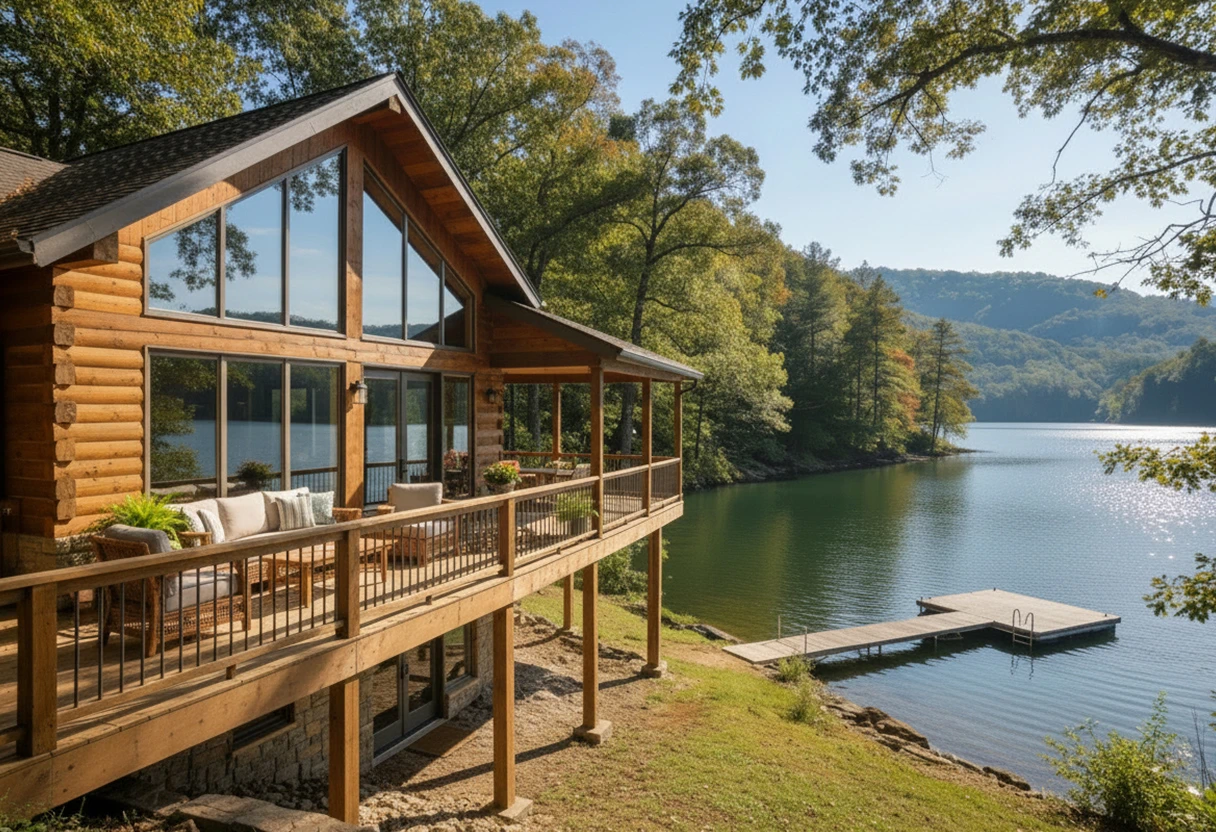
vacation rental in the Ozark Mountains

Ozark Mountains

Despite a sharp rise in ADR from January to April 2026, occupancy falls markedly after January and remains weak through April. As a result, RevPAN is underperforming compared with the same period in 2025 - particularly from February onwards. Higher prices are not matched by booking pace, leading to a missed revenue opportunity.

What Beyond's Data Shows:

  • ADR is pacing ahead year over year, with strong growth from March through June. Pricing power is clearly present, especially heading into the early summer season.
  • Occupancy is relatively low outside of January and early spring but begins to build from May into June, reflecting a classic pattern seen in drive-to leisure markets, with later booking behavior.
  • RevPAN remains soft through February- April, then rises sharply in May and June as higher ADR combines with improving occupancy. These peak months drive the majority of revenue forecast today for this market.
  • Performance is concentrated around late spring and summer, with shoulder months relying more on pricing and availability strategy than organic demand.
  • Demand is driven by short-to-medium lead times, with most bookings made 7-30 days out for weekend getaways and longer lead times (30-90 days) concentrated around holiday weekends, regional events, and summer cabin vacations. Length of stay typically ranges from 2-4 nights, extending to 5-7+ nights during peak periods in mid-summer.

Recommended Actions:

  • Ozark demand is highly seasonal and drive-to, with many bookings happening closer to arrival outside peak summer. Keep time-based and occupancy-based pricing fully enabled so rates rise automatically as lead times shorten, instead of relying on static monthly pricing.
  • For shoulder and mid-week dates (typically 0–30 day lead time), relax minimum stays and enable gap-fills and changeover fills. This captures last-minute leisure trips without weakening peak pricing.
  • For summer weekends and holidays (often 30-60+ day lead time), hold firm price floors and apply minimum stays only on the highest-demand nights. Avoid early discounting - rate integrity matters more than early volume.
  • Use limited early-book incentives only where pacing is clearly behind, and keep last-minute promotions active for under-sold mid-week dates. Avoid broad, permanent ADR cuts.
  • Balance short-lead and peak-season strategies by keeping availability flexible and using targeted 7-14 day last-minute pricing to capture weekend demand, while layering in advance-purchase rates and weekly discounts 30–90 days out for holiday and summer stays to maximize RevPAN without sacrificing peak pricing.
Oregon Coast

Oregon Coast

Despite occupancy pacing on the Oregon Coast closely tracking last year, forward pricing for peak and early-summer dates remains below prior realized levels, creating a price-demand mismatch in which healthy demand is not being fully monetized. This revenue opportunity is being left on the table due to conservative ADRs rather than weak booking behavior.

What Beyond's Data Shows:

  • Occupancy pacing on the Oregon Coast is broadly in line with last year, confirming that baseline demand is stable, not deteriorating. However, winter remains a clear off-season.
  • Demand in the coming months is highly concentrated around short, event-driven windows, particularly in February (Presidents Day) and early April (Easter). Outside of these dates, booking activity is sparse and largely short-lead, reinforcing the importance of flexibility and targeted tactics rather than broad pricing moves.
  • ADR pacing follows a seasonal upward trend. 
  • The combination of stable occupancy and lower forward ADR implies weaker RevPAN performance than last year on peak dates, driven by price rather than volume.
  • Oregon Coast demand is driven by short lead times and weekend-focused trips, with most bookings arriving within 7-30 days and typical stays lasting 2-3 nights, with the exception of longer trips during the summer. Longer lead times and longer stays emerge mainly as summer and major holiday periods hit the calendar.

Recommended Actions:

  • Increase prices incrementally for event-driven weekends. Specifically, increase rates selectively for February and early April event windows, where short-term demand spikes are likely, and guests tend to book with super short lead times.
  • Keep base pricing stable for January-April overall, as low occupancy and weak RevPAN indicate volume constraints rather than pricing power outside of peak dates.
  • Reduce minimum stays to capture short trips.
  • Use targeted midweek discounts or length-of-stay incentives in March and April to lift occupancy without discounting high-demand weekends.
  • Optimize for short-lead demand by keeping availability flexible and using targeted last-minute pricing 7-14 days out, while layering in early-bird and non-refundable offers for summer and holiday windows (30-90 days out) to capture longer stays and maximize RevPAN.
  • Given that several Oregon Coast markets impose strict caps on bookable nights per month, rate strategies should prioritise maximising revenue per available night while remaining compliant with local regulations.

How to Get Ahead in 2026

No Matter Your Market
  • Capture demand before cutting price. Prioritize visibility and bookability over broad discounts. Enable dynamic time-based and occupancy-based pricing so rates adjust automatically as lead times shorten, and use short, targeted promotions for under-pacing months instead of permanent ADR cuts.
  • Remove friction that blocks incremental bookings. Relax restrictive rules on low-pacing dates by allowing shorter minimum stays, enabling gap-fill and flexible changeovers, and reviewing peak-only restrictions. These changes help unlock additional nights without weakening the overall pricing strategy.
  • Defend winter occupancy tactically. Promote midweek and shoulder dates with lighter minimum-stay requirements and modest price adjustments if demand does not rebound, while protecting weekend and peak pricing.
  • Segment offers based on booking behavior. Use early-booking incentives to stimulate long-lead and shoulder-season demand, and last-minute value for short-lead bookings. Non-refundable or limited-time offers can improve conversion while preserving ADR.
  • Spring softness is seasonal - avoid panic discounting. Focus on tightening pricing and rules ahead of summer and holiday windows, and pre-adjust for known events where demand tends to book late but supports higher rates.
  • Measure weekly and act quickly. Track booked nights, ADR, RevPAN, and median lead time on a weekly basis. Small, fast adjustments - especially when automation is enabled - consistently drive more revenue.